
What Pax8 Beyond Reinforced About Where MSPs Need to Go Next
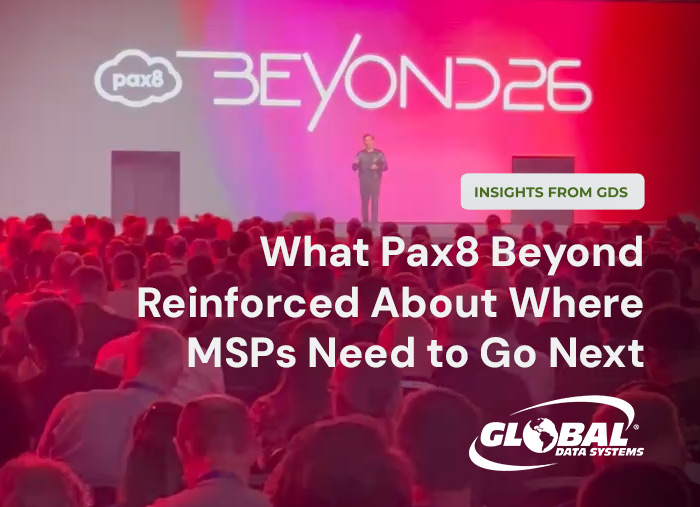
I attended Pax8 Beyond to get a better sense of where the channel is actually headed, not just what is being marketed.
AI was obviously a major focus throughout the event, but the bigger takeaway for me was not a specific product, announcement, or keynote. It was how clearly the expectations of MSPs are changing.
For a long time, MSPs have created value through support, infrastructure management, licensing, and reactive service delivery. Those things still matter, and they are not going away. But they are no longer enough on their own. What customers need now is not just someone to manage technology. They need a partner who can help them apply technology in a way that improves how the business actually operates.
That was one of the clearest themes at the event. Customers are hearing about AI everywhere, but many of them still do not know where it fits, how to use it safely, what data is ready, what governance needs to be in place, or which processes are actually worth automating. Those are not product questions. They are business and operational questions. And that changes the role of the provider supporting them.
The Shift From MSP to MIP
A lot of the discussion at Pax8 Beyond centered on the idea of the MSP evolving into a Managed Intelligence Provider. Whether the industry ultimately standardizes around that exact term remains to be seen, but the broader shift behind it is very real. Customers increasingly expect their technology partners to help them navigate automation, security, governance, data readiness, and AI adoption, not simply manage infrastructure and support tickets.
What’s driving that shift is the growing expectation that technology investments should produce measurable business outcomes. Organizations are looking for ways to improve efficiency, reduce risk, streamline operations, and create competitive advantage. Technology remains the enabler, but business outcomes have become the objective.
For GDS, that’s why the Managed Intelligence Provider concept resonates. It reflects the reality that technology management is no longer the end goal. The goal is to help organizations apply technology, data, automation, and AI in ways that deliver meaningful results.
Agentic AI Is Moving From Experimentation to Strategy
One area where this shift was especially visible was Agentic AI. What stood out to me was how quickly the conversation has moved from experimentation into actual partner strategy. This is no longer just vendors talking about what might happen someday.
Partners are actively working through how to build, support, govern, secure, and monetize AI-driven workflows and agents in production environments.
That matters because the opportunity is not simply selling AI. Customers are not trying to buy AI for the sake of saying they have it. They are trying to solve problems, improve efficiency, reduce risk, and create better business outcomes. The providers that stand out will be the ones that can take AI, security, governance, and process knowledge and turn them into something structured, repeatable, and useful.
Why Proprietary IP Matters
That is also why proprietary IP came up so often throughout the event. Historically, much of MSP revenue has come from resale and traditional managed services.
Going forward, a larger opportunity exists in building repeatable offerings around common business challenges.
That could include:
- Internal service desk agents
- HR knowledge agents
- Customer service automation
- Compliance workflows
- Security response automation
The common thread is that these are not simply tools.
They are repeatable service outcomes built around real customer needs.
The MSPs creating the most value over the next several years will not necessarily
be the ones with the largest technology portfolios. They will be the ones that can package expertise, security, governance, automation, and business knowledge into solutions customers can consume and scale.
The Future Role of the MSP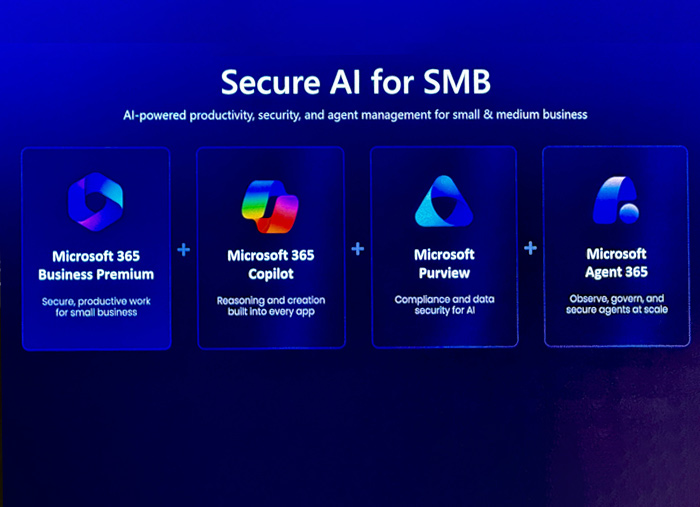
For me, that ties directly into how I think about the future role of a modern MSP. We will still need to secure, support, and manage environments. That foundation remains critical. But the real long-term value is increasingly found in helping customers modernize how they work. That means being able to guide conversations around readiness, governance, workflow design, automation, adoption, change management, and business process improvement, not just technical administration.
In many ways, the role is evolving from managing technology to helping organizations manage change. The providers that thrive in this environment will be the ones that understand both the technology and the business challenges their customers are trying to solve. That evolution is one of the reasons the Managed Intelligence Provider model is gaining traction. Regardless of what terminology the industry ultimately adopts, the expectation itself is already changing.
The Biggest Challenge Isn’t Awareness, It’s Execution
One of the recurring concerns I heard throughout the conference was not whether AI matters. Most people already understand that it does. The challenge is execution.
Partners are still trying to work through how to operationalize it, price it, govern it, secure it, deliver it responsibly, and turn it into something customers can actually consume. Questions around risk, data protection, compliance, adoption, and measurable outcomes surfaced repeatedly throughout the event. In other words, the hardest part is not awareness; it is implementation. Organizations need partners who can help bridge the gap between AI interest and AI adoption.
Why the Agent Store Matters
That is also why announcements like the Pax8 Agent Store matter. To me, the significance is less
about hype and more about practicality. It creates a clearer path for partners to discover, evaluate,
and deploy agents without having to build everything from scratch. More importantly, it helps move
the conversation from theoretical AI discussions toward real-world implementation.
If it helps partners deliver repeatable customer outcomes faster and more effectively, it could
prove to be one of the more meaningful developments to come out of the event
Ready to put AI to work for your business?
Contact UsWhat This Means for GDS, and the Industry
From a GDS perspective, much of what I heard at Pax8 Beyond reinforced a direction we are already pursuing. We’ve been focused on secure and governed environments, automation-first service delivery, and AI adoption, and helping customers move beyond traditional IT support toward measurable business outcomes.
The event did not change that direction; it validated it. More broadly, I left Beyond convinced that the channel is entering a new phase. The conversation is no longer centered on technology deployment alone. It is increasingly focused on how organizations apply technology to improve operations, reduce risk, increase efficiency, and create competitive advantage.
That shift is why concepts like the Managed Intelligence Provider are gaining traction. Organizations need more than technology support. They need partners that can combine security, governance, automation, AI, and business context into repeatable outcomes.
At GDS, we believe that evolution is already underway. The providers that successfully make that transition will be the ones that create the most value for customers over the next decade.
Benefits of Managed IT Services from Global Data Systems
- Strategic Managed IT: We help you solve your technology related business problems.
- Connectivity: We get you reliable, secure connectivity anywhere in the western hemisphere in 48 hours.
- Support: When you need help simply call our 24x7x365 support number.
- Billing: Instead of managing hundreds of vendors - get one, easy to read bill from GDS.
Contact Managed Services Provider, Global Data Systems Security
Get In Touch
310 Laser Lane
Lafayette, Louisiana 70507
Office Hours: Monday - Friday
8 a.m. - 5p.m.
Contact Us >
24 / 7 / 365 Support
Our dedicated support
staff are available by
phone 24 hours a day.
Phone: 888-435-7986
